Zara vs H&M 2026: Which Is Better For Quality, Price And Style
Zara vs. H&M 2026: The Truth About Who Wins the Style War
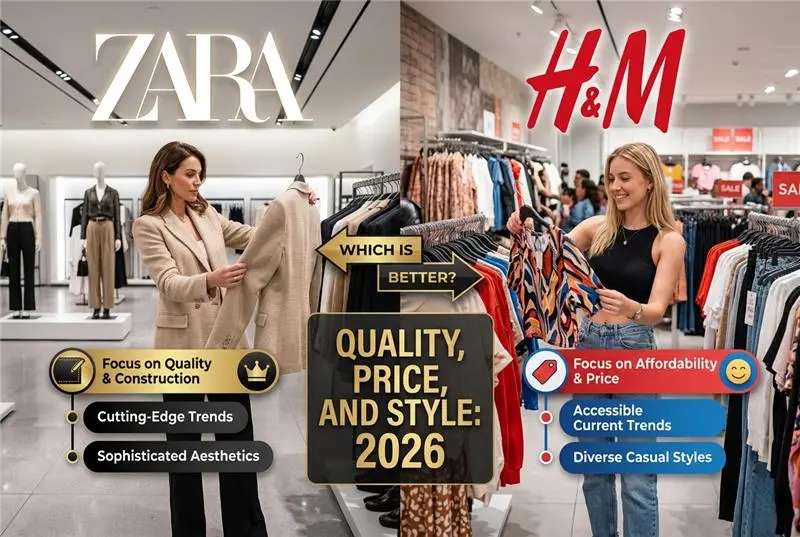
Spending $100 on a blazer that loses its shape in weeks? That’s exactly why the Zara vs H&M 2026 debate matters more than ever.
Fashion in 2026 isn’t just about looking good,it’s about buying smarter. Today’s shoppers want clothes that last longer, fit better, and actually justify their price. And when it comes to fast fashion, two names still dominate the conversation: Zara and H&M.
But here’s the real question: Is Zara better than H&M in 2026, or are you just paying for branding?
After analyzing the latest collections, fabric quality, pricing strategies, and real-world usability, here’s a complete breakdown to help you decide which brand deserves your money.
Zara vs H&M 2026: Key Differences
Before diving deep, here’s a quick snapshot of how both brands compare in 2026
| Feature | Zara | H&M |
|---|---|---|
| Style | High-fashion, trendy | Minimal, everyday basics |
| Pricing | Slightly expensive | Budget-friendly |
| Durability | Strong in outerwear | Strong in basics |
| Sizing | Runs small | True-to-size |
| Sustainability | Improving | More transparent |
Design & Style Comparison
The 2026 edition of fast fashion isn’t just about being trendy, it’s also about smart shopping.
Zara: Runway Inspired Fashion
Zara continues to dominate the “runway to retail” space in 2026. Their collections feel bold, modern, and inspired by luxury fashion houses. Think structured blazers, asymmetrical dresses, and statement coats.
If you want to stand out at events, meetings, or social gatherings, Zara delivers that premium aesthetic without the luxury price tag. Their pieces often feel like mini investments in fast fashion.
H&M: Clean and Functional Basics
H&M takes a completely different approach. Instead of chasing every trend, they focus on timeless, wearable pieces. Neutral tones, soft fabrics, and minimal designs define their 2026 collections.
If your goal is to build a practical wardrobe with everyday outfits, H&M feels more reliable and consistent.
Final decision
For bold fashion → Zara wins
For everyday wear → H&M leads
Fabric Quality in 2026: Which Lasts Longer?
One of the biggest concerns in fast fashion has always been durability. So how do both brands perform now?
Zara Quality Breakdown
Zara has clearly improved the quality of its premium lines. The “Studio” and “Limited Edition” collections use better tailoring, thicker fabrics, and stronger stitching.
However, some lower-tier items still feel thin and don’t hold up as well, especially after multiple washes.
H&M Quality Breakdown
H&M stands out for its comfort and consistency. It designs its cotton tees, knitwear, and casual pieces for frequent use. Many of its items feel softer and hold up better over time with everyday wear.
Zara vs H&M Quality (2026 Insight)
Zara: performs better when it comes to coats, blazers, and formal wear.
H&M: works better for casual clothing and daily use.
Cost Per Wear: The Smart Shopping Formula
Price tags alone don’t tell the story. A $100 Zara blazer may seem pricey compared to a $60 H&M alternative, but what about cost per wear?
A $100 Zara blazer worn 50 times = $2 per wear
A $60 H&M blazer worn 10 times = $6 per wear
This simple math changes everything.
General Guidance for 2026:
Zara: Shop for statement coats, structured outerwear, and formal evening wear. Think of these as investment fast fashion pieces.
H&M: Shop for denim, casual tees, loungewear, and activewear, items that are affordable, comfortable, and last longer through everyday use.
- Tip for High Low Styling: Pair a bold Zara coat with a soft H&M organic cotton tee. This mix balances style and functionality while keeping costs down.
Sizing & Fit: US Shopper Perspective
Sizing can make or break your shopping experience.
Zara Sizing
Zara follows European sizing, which often runs smaller and slimmer. This can be frustrating for many US shoppers, especially when ordering online.
H&M Sizing
H&M has significantly improved its sizing in 2026. Their true to size approach, multiple length options, and stretch fabrics make them more inclusive and easier to shop.
Extra Tip: Always check Zara’s size chart before ordering online. H&M keeps its sizing consistent, making it a reliable choice for both casual and professional wear in 2026.
Zara vs H&M sizing US verdict
H&M clearly wins for comfort, consistency, and fewer returns.
Sustainability: Real Effort or Marketing?
Sustainability now plays a major role in how people make buying decisions.
Zara’s Approach
Zara has introduced a “Pre-Owned” system that lets customers resell items and extend their lifespan. While this is a positive step, many critics believe its overall impact is still limited.
H&M’s Approach
H&M has expanded its “Conscious Choice” line and continues to move toward using more recycled and sustainable materials. It also shares more transparency about its sourcing and production processes.
Fast Fashion Comparison (2026 Insight):
H&M currently appears to be a more reliable option for eco-conscious shoppers.
Where to Shop Smart in 2026
If you’re trying to get the best value, here’s a simple approach:
- Use Zara for standout outfits, formal wear, and fashion-forward pieces.
- Use H&M for basics, everyday clothing, and budget-friendly shopping.
Also, always check for seasonal discounts and promotions—this is where you can save the most money.
Our Final Opinion: Which Brand Is Better?
So, which brand is better, Zara or H&M in 2026?
Choose Zara if you want to turn heads and invest in statement pieces. Their high fashion looks mimic Milan runway trends and instantly elevate your formal wardrobe.
Choose H&M if you are building a practical, functional, and versatile closet. Premium basics, better sizing, and affordability make H&M ideal for everyday wear.
Don’t limit yourself to just one brand; use both strategically.
That’s the approach smart shoppers are taking in 2026.
Your 2026 Smart Shopping Checklist
Before you buy anything in the Zara vs H&M 2026 debate, take a quick pause. Smart shoppers don’t just follow trends; they check value, fit, and long term use. This simple checklist can help you avoid wasting money and make better fashion decisions in 2026:
Check the Fabric Tag: Is it 100% natural fiber (Cotton, Linen, Silk)? If yes, it’s a keeper for longevity.
- Check fabric quality (natural fibers last longer)
- Think cost-per-wear (at least 20–30 uses)
- Consider sizing (Zara may require sizing up)
- Look for sustainable options (H&M Conscious, Zara Pre Owned)
- Make sure it fits multiple outfits in your wardrobe
In the end, the Zara vs H&M 2026 choice isn’t about picking a single winner it’s about shopping smart based on your needs. If you want standout fashion, Zara delivers; if you want comfort and everyday value, H&M makes more sense.
The real strategy in 2026? Mix both brands wisely, focus on quality over hype, and build a wardrobe that actually works for you, not just your Instagram feed.
FAQs
Q1. Is Zara or H&M better quality in 2026?
Ans. It depends on what you buy. Zara offers better quality in structured items like coats and blazers, while H&M performs better in casual wear like t-shirts and knitwear. Choosing based on category gives you the best results.
Q2. Which brand is more affordable in 2026?
Ans. H&M is more budget-friendly overall. Zara tends to be slightly more expensive, especially for premium-looking pieces. However, Zara can still offer better value for long-term wear.
Q3. Is fast fashion improving in 2026?
Ans. Yes, both brands are moving toward better materials and greater sustainability. They’re not perfect yet, but improvements in fabric quality and recycling programs show clear progress.
Share:

Aiden
Aiden has been reviewing fashion brands for years and never sugarcoats his opinions. He digs into the quality, pricing, and overall value so you know exactly what you are getting before you buy. His reviews are honest, straightforward, and always written with the reader in mind.
Reviews
No reviews yet!