Poshmark vs Depop 2026: Which Secondhand App Wins for American Shoppers?
Same clothes Different app Completely different results.
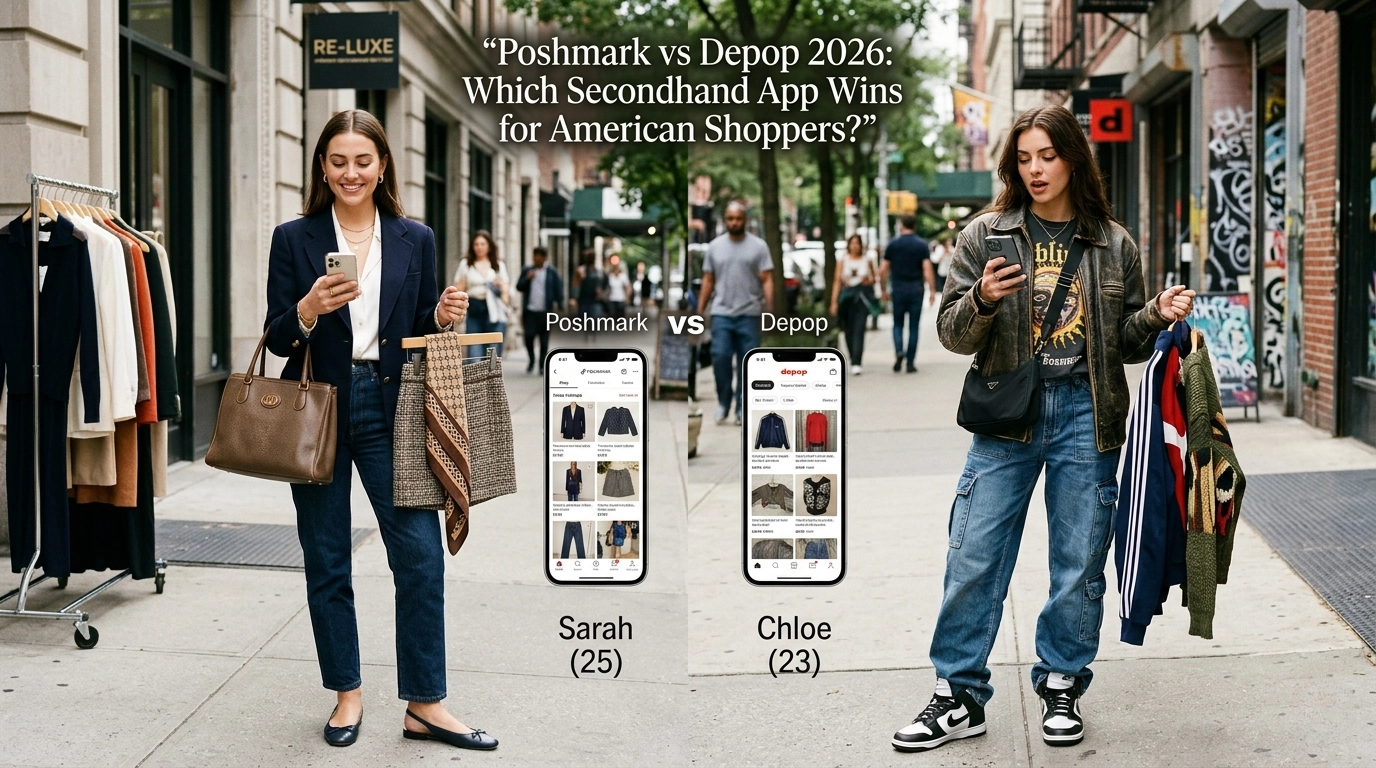
The secondhand fashion market is not slowing down. It is projected to hit $350 billion globally by 2028, and right now, the Poshmark vs Depop 2026 debate is at the center of it all for American shoppers.
Both apps let you buy and sell pre loved clothes. Both have built loyal communities. But here is the thing, they are built for very different people. Picking the wrong one wastes your time, cuts into your profits, and leaves your best pieces sitting unsold. Let's break down exactly which app wins for you in 2026.
Quick Answer
Poshmark vs Depop 2026: Poshmark is better for American shoppers who want brand-name clothing, simple shipping, and a larger U.S. focused audience. Depop is better for vintage, Y2K, and streetwear, especially if you want lower fees and more unique finds.
Jump Ahead
- What Is Poshmark & Depop?
- Poshmark vs Depop 2026
- Shipping & Delivery
- Audience — Who Shops Where?
- What to Buy on Each App
- Best for Buyers
- Best for Sellers
- Best for American Shoppers
- Pros & Cons
- And The Winner Is...
- FAQ
What Is Poshmark & Depop?
Poshmark in a Nutshell
Poshmark launched in 2011 and has grown into one of the largest resale platforms in North America. It now hosts over 130 million registered users mostly in the U.S. and Canada. Think of it as a social marketplace: sellers share listings, join virtual "Posh Parties," and build followings just like social media. It works best for brand-name clothing, everyday fashion, accessories, and even home goods.
Depop in a Nutshell
Depop is part Instagram, part resale marketplace. It launched in 2011 as well but took off with Gen Z. Today, it has around 56 million global users with a heavy focus on vintage clothing, Y2K fashion, streetwear, and one of a kind pieces. If your style is curated, creative, and a little niche Depop is where your buyer is waiting.
Poshmark vs Depop 2026: Head to Head Comparison
Fees & Commissions
This is where the two apps differ the most, and it matters a lot if you are serious about profit.
Poshmark fees:
- Sales under $15, flat fee of $2.95
- Sales over $15, flat 20% commission
- No separate payment processing fee; it is all included
Depop fees:
- Zero seller commission as of July 2024
- Payment processing only: 3.3% + $0.45 per sale in the U.S
- Total effective fee: roughly 3.75% to 4% per sale
Depop fees
- Depop’s seller fee structure is lower overall.
- In the U.S., sellers typically pay payment processing fees, which are around 3.3% plus $0.45 per sale.
- The exact amount can vary depending on current platform rules and payment setup.
A simple example: if you sell a $50 jacket, you will usually keep more on Depop than on Poshmark. But fee savings are only part of the story, because shipping and buyer behavior also affect how fast something sells.
Shipping & Delivery
Poshmark shipping: Poshmark keeps shipping simple. Sellers use a prepaid shipping label, and buyers pay a flat shipping charge at checkout. That makes the process easy to understand and easy to manage.
Depop shipping: Depop gives sellers more flexibility. You can use Depop shipping options or handle shipping yourself, which can be cheaper for lightweight items. For heavier items, Poshmark’s simpler setup can feel easier and more predictable.
App Interface & Ease of Use
Poshmark feels more like a traditional resale marketplace with social features layered on top. You can search by brand, size, and category, which makes it easy for buyers who know what they want.
Depop feels more visual and Instagram-like. It is built around photos, aesthetics, and curated shop vibes. That makes it exciting for style driven shoppers, but it also means good photos and branding matter more.
Audience: Who Shops Where?
Poshmark Audience:
This is the most important factor that most people overlook
- 130 million+ users, primarily in the U.S. and Canada
- Slightly older demographic, Millennials and older Gen Z
- Actively searching for brands like Lululemon, Nike, Free People, Anthropologie, Coach
- Items priced between $20 and $150 move fastest
Depop Audience:
- 56 million global users
- 5 million active buyers and 2.5 million active sellers.
- Heavily Gen Z ages 16 to 26
- Shopping for vintage, Y2K, streetwear, handmade, and one of a kind pieces
- Creative and aesthetic driven buyers who follow sellers like influencers
What to Buy on Each App

Buy on Poshmark:
- Brand name everyday clothing: Gap, Zara, J.Crew, Lululemon
- Designer handbags and accessories
- Shoes, jewelry, activewear
- Kids' clothing and home goods
Buy on Depop:
- Vintage clothing from the 80s, 90s, and early 2000s
- Y2K fashion and streetwear
- Band tees, rare sneakers, indie designer pieces
- Handmade or upcycled one of a kind items
If you want a secondhand hoodie from a mainstream brand, Poshmark is usually easier. If you want a vintage statement piece or a Y2K top, Depop is often the better place to look.
Best for Buyers
Choose Poshmark if you want:
- A large selection of recognizable brands.
- Easy browsing by brand and size.
- A more straightforward shopping experience.
- Practical everyday clothing.
Choose Depop if you want:
- Unique or vintage pieces.
- A more aesthetic, discovery based shopping experience.
- Sellers with curated shops.
- Items that feel less mainstream.
Best for Sellers
Choose Poshmark if you have:
- Brand name clothing in good condition.
- Items that fit a broad U.S. audience.
- A preference for simple, prepaid shipping.
- A willingness to trade higher fees for easier exposure.
Choose Depop if you sell:
- Vintage, streetwear, or niche fashion.
- Pieces that look better in photos and styled listings.
- Items where lower fees matter more.
- Fashion with a strong visual identity.
Best for American Shoppers
For American buyers and sellers specifically, Poshmark has the home advantage. Its entire platform is built around the U.S. market, USPS shipping integration, a massive domestic user base, and brand categories that match exactly what American closets hold.
Depop works well for American shoppers too, especially younger ones, but its global focus means you sometimes compete with international sellers or pay more to ship across borders.
If you’re in the U.S. and want something simple and easy to use, Poshmark is the better choice. But if you’re into vintage fashion or trying to build your own style as a Gen Z seller, Depop offers more creative freedom and a stronger audience for that.
Pros & Cons
Poshmark
Pros:
- Large U.S. audience, 130 million users
- Simple flat rate prepaid shipping
- Strong brand recognition with American buyers
- Live selling feature, Posh Shows
- Good for high ticket and designer items
Cons:
- 20% commission is the highest among major resale apps
- Requires daily sharing and engagement to stay visible
- Limited international reach
- Less effective for niche or vintage items
Depop
Pros
- Lowest fees, 3.3% + $0.45 per sale
- Perfect for vintage, Y2K, and streetwear.
- Highly engaged Gen Z buyer community.
- More freedom to build a visual brand.
Cons
- Smaller U.S. specific audience, 40 million globally.
- Requires strong photography and hashtag strategy
- Less effective for mainstream brand name clothing
- App only for most functions, the website is limited.
And The Winner Is...

There is no single winner for everyone.
Poshmark wins for American sellers with brand name clothing, buyers who want variety and trusted sellers, and anyone who wants simple shipping without thinking twice.
Depop wins for Vintage lovers, Gen Z sellers building a fashion brand, low fee sellers, and buyers hunting for pieces nobody else has.
The smartest move in 2026? Sell on both. List your brand name basics on Poshmark and your vintage or unique pieces on Depop. Use the right platform for the right item, and watch your sales grow.
If you sell different kinds of items, using both apps can make sense. Mainstream brand pieces often do better on Poshmark, while vintage and niche items often shine on Depop.
Our Honest Verdict
The Poshmark vs Depop 2026 comparison comes down to one thing: knowing what you sell and who you sell to. Poshmark gives you scale, simplicity, and a massive American audience. Depop gives you lower fees, creative freedom, and access to the most fashion-forward buyers online right now.
Know your inventory. Know your buyer. Pick accordingly, or better yet, use both and let the market decide.
The best resellers in 2026 are not loyal to one app. They are loyal to their profits.
Q1: Is Depop or Poshmark better for beginners?
Ans. Poshmark is easier to start with. Flat rate shipping, a simple listing process, and a huge built in audience make it more forgiving for first time sellers. Depop rewards sellers who invest in photography and branding, which takes more time to learn.
Q2. Which app has lower fees?
Ans. Depop usually has lower selling fees than Poshmark, especially for sellers in the U.S.
Q3. Is Poshmark only for women’s fashion?
Ans. No, Poshmark sells men's, women's, and children's clothing, plus accessories, shoes, home goods, and small electronics. It started with women's fashion but has expanded significantly over the years.
Share:

Aiden
Aiden has been reviewing fashion brands for years and never sugarcoats his opinions. He digs into the quality, pricing, and overall value so you know exactly what you are getting before you buy. His reviews are honest, straightforward, and always written with the reader in mind.
Reviews
No reviews yet!